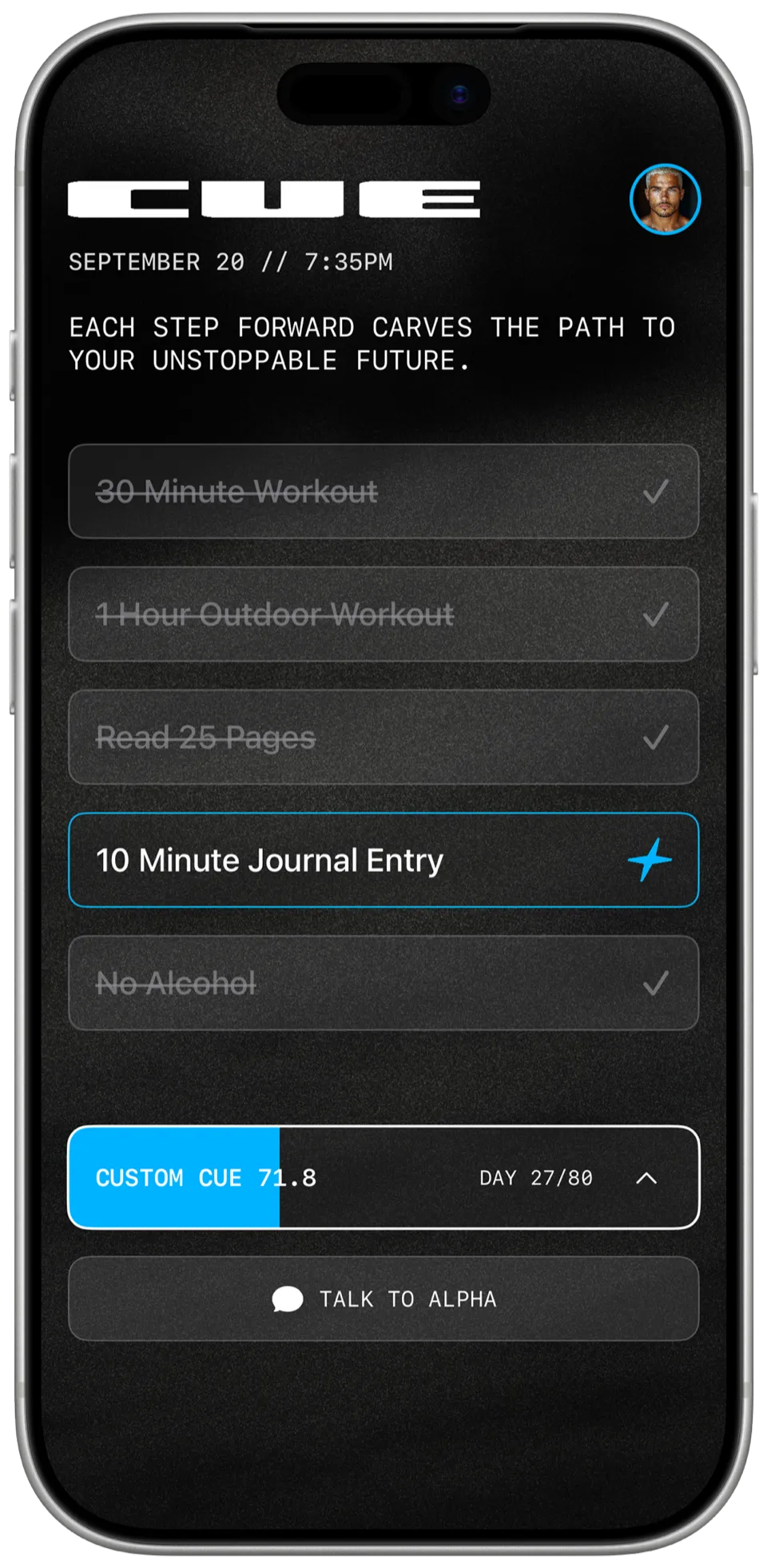
To follow through, turn the goal into a contract you can execute: define the finish line, choose the smallest daily action that moves you toward it, identify the moment you usually quit, and decide in advance what you will do when that moment arrives. Then keep visible proof until the work is finished.
You probably do not have an idea problem.
You know what you want. You have started before. You may have started five times.
The break happens later, after the first surge of energy is gone and the goal stops feeling new. That is the part most plans ignore. They are built for the person standing at the starting line, not the person facing a tired Tuesday three weeks later.
Follow-through begins when you build for that person.
A Goal Without a Finish Line Can Follow You Forever
“Get in shape.” “Write more.” “Fix my life.” These goals sound serious because they are large. They are also nearly impossible to finish.
If the finish line moves every time you get closer, the goal becomes a permanent accusation. You can work hard and still feel behind because nobody decided what done means.
Name the result. Name the date. Name the evidence.
“Get in shape” becomes “complete three planned workouts a week for eight weeks.” “Write more” becomes “finish a 12,000-word first draft by October 31.” The new version may be less dramatic. Good. Drama starts things. Clarity finishes them.
Stop Promising the Entire Outcome Every Morning
You cannot complete a three-month goal today. You can only complete today’s part.
That sounds obvious, but people destroy follow-through by mentally carrying the full weight of the outcome into every work session. The book, the body, the business, the exam: all of it sits on the desk at once. Starting feels like trying to lift the whole future.
Cut the promise down to the next unit of work.
Run the planned miles. Write the next 500 words. Send the proposal. Read the next ten pages. Do not demand that today prove the entire goal will succeed. Demand that today be complete.
Find the Exact Place You Usually Leave
“I lose motivation” is not an explanation. It is a fog machine.
Where does the break actually happen?
Maybe you miss one day and decide the streak is ruined. Maybe the work gets boring. Maybe you make the plan so aggressive that one crowded week destroys it. Maybe nobody can see whether you did the work, so the promise quietly changes after dinner.
Study your exit.
If you disappear when the work gets boring, schedule the boring block and define its endpoint. If one miss turns into a collapse, decide your restart rule before Day 1. If evenings keep failing, move the action earlier. If the goal is too large to survive real life, reduce the daily load without erasing the finish line.
A plan becomes credible when it accounts for the part of you that has quit before.
Your Hard-Day Minimum Must Still Be Real
A hard-day minimum is not a loophole. It is the lowest honest version of the work.
If your normal writing target is 500 words, the minimum might be 100 usable words. If your normal workout is 45 minutes, the minimum might be a planned 15-minute session. If the goal is to send a proposal, “think about the proposal” does not count.
The minimum must leave evidence.
Use it when the day genuinely closes in. Do not use it every morning because it is available. The point is to keep the chain under load, not to build a smaller life around the emergency setting.
Do Not Confuse Intensity With Reliability
A violent first week can feel like commitment. Often it is just impatience wearing combat boots.
You double the workouts. Delete every app. Wake up at 5 a.m. Build a schedule that assumes nothing will go wrong. For four days, you feel transformed.
Then the plan meets your actual life.
Follow-through is less cinematic. It is the correct task performed again after the mood changes. It protects the boring middle. It does not need a new identity every Monday. That is the practical difference between discipline and motivation.
Choose a pace that demands something from you and can still reach the date. The right plan should feel serious, not suicidal.
Make Completion Visible
Memory is generous. It turns partial work into effort and effort into completion.
Use a record that does not care how the day felt: a checked task, a saved draft, a workout log, a submitted form, a photograph of the completed work. Keep the proof simple. You are not building a courtroom. You are preventing the promise from becoming fictional.
This is where self-accountability becomes concrete. A rule, deadline, and proof leave less room for the nightly story.
When You Miss, Tell the Truth Fast
Do not turn one miss into a personality diagnosis.
Also do not pretend it did not happen.
Record the miss. Identify the cause without decorating it. Then follow the rule you chose before the challenge began. If the contract says restart, restart. If it says resume at the next scheduled block, resume. What matters is that the hard moment does not get to invent a softer rule.
If the plan has become unsafe, impossible, or irrelevant, stop it deliberately and build a better challenge. That is a decision. Quietly drifting away is not.
Finish One Thing Before You Reinvent Yourself Again
There will always be a more exciting plan.
A cleaner notebook. A harder challenge. A better Monday. A new version of you who supposedly will not struggle.
Let that person wait.
Take the goal already in front of you. Write the finish line. Choose today’s proof. Name the point where you usually leave.
Then stay.
Every completed day also becomes evidence that you can trust your own word again.
Not forever. Until the contract is complete.