Pick one monthly goal with a finish line a stranger could verify. Give it one weekly action, one minimum version, and one deadline. Do not build a list of twelve new identities. Choose a piece of work you can complete in the next 30 days and start it today.
“Get healthier.” “Read more.” “Fix my finances.” Those are directions, not goals. You cannot finish a direction. A real monthly goal tells you exactly what done looks like.
The monthly-goal rule: if you cannot answer “Did I finish it?” with yes or no on the last day of the month, rewrite the goal before you begin.
Choose Your Monthly Goal in 60 Seconds
Start with your actual capacity. A hard month does not need a heroic goal. It needs a smaller contract you will keep. Choose light if your calendar is crowded, standard if you can protect two or three blocks a week, and demanding only if you are willing to remove something else.
| Goal | Recurring action | Finish line | Level |
|---|---|---|---|
| Walk 50 miles | Four walks each week | 50 total tracked miles | Standard |
| Clear one room | Three 20-minute resets weekly | Everything kept has a place | Light |
| Finish one book | 10 pages a day | Last page completed | Light |
| Build a portfolio piece | Three focused blocks weekly | One finished, shareable project | Demanding |
| Reconnect with four people | One invitation each week | Four real conversations | Standard |
| Complete a money reset | One admin block weekly | Budget, bills, and accounts reviewed | Standard |
Movement and Environment Goals
1. Walk 50 miles this month
Vague version: walk more. Finishable version: log 50 miles by the final day of the month. That can be 1.7 miles a day or four longer walks a week. Pick the schedule before the weather gets a vote.
2. Complete 12 strength sessions
Three sessions a week. Each session can be short, but decide what counts in advance: for example, a written routine with at least four movements. If you are new, work within your ability and get qualified guidance where needed.
3. Stretch for 10 minutes on 20 days
The finish line is 20 completed sessions, not “become flexible.” Put the routine where you will use it and make ten minutes the full win. More is optional.
4. Cook 12 dinners at home
Choose three default meals, buy the ingredients, and mark a completion only when dinner is made. This is not a nutrition overhaul. It is twelve decisions you no longer have to improvise at 7 p.m.
5. Clear one room completely
Choose the room. Define clear: every surface usable, every kept item assigned a place, donations removed from the house. “Work on the bedroom” can drag on forever. “Bedroom reset complete by September 30” ends.
6. Remove 100 items
Sell, donate, recycle, or discard 100 things you no longer use. Keep one visible count. Moving a box to another closet does not count.
7. Build a seven-minute evening reset
Complete it on 24 nights. Your checklist might be dishes, clothes, desk, tomorrow’s essentials. Seven minutes. Same order. Stop when the timer ends.
Learning, Creative, and Work Goals
8. Finish one 250-page book
Read ten pages on 25 days. Audiobooks count if that is the format you choose before day one. The goal is not to look like a reader. The goal is to finish the book.
9. Complete one short course
Choose a course that fits the month and define completion: every core lesson watched and every required exercise submitted. Bookmarking six courses is not learning.
10. Learn 100 useful words in a language
Study five words on 20 days, then pass your own final review at an agreed threshold. Keep the list narrow: words you will actually say, not random vocabulary collected for a streak.
11. Write 10,000 words
That is 500 words on 20 days. Journal, essays, fiction, or a project all count if you choose the lane first. Editing can wait. The monthly finish line is output.
12. Publish four small pieces
One useful post, video, drawing, or newsletter each week. “Create content” is fog. Four public URLs or finished files is proof.
13. Build one portfolio project
Write the acceptance test before starting: what it does, what finished looks like, and where it will be shared. Scope it so one person can finish it in twelve focused sessions.
14. Clear one work backlog
Pick a closed list: 40 unprocessed notes, 25 expense receipts, or one neglected folder. Do not use “get organized.” Name the pile and make it disappear.
Relationships, Money, and Life-Maintenance Goals
15. Have four phone-free meals with someone
Put four dates on the calendar. Phones away, not face down on the table. The finish line is four meals where your attention stayed in the room.
16. Reconnect with four people
Send one specific invitation a week and complete four conversations. Do not count liking a post. The action is contact; the finish line is a real exchange.
17. Write four proper thank-you notes
Choose four people and say what they did, when it mattered, and what changed because of it. Send the notes. Drafts in your phone do not count.
18. Review every recurring charge
Open the statements, list each subscription, and make a keep-or-cancel decision. The goal ends when every charge has an owner and the unwanted ones are actually canceled.
19. Build a one-month spending record
Record every purchase for the full month. No moral verdict, no retroactive guesses. The win is an honest record you can use to make the next decision.
20. Finish one ignored life-admin project
Renew the document. Book the appointment. File the paperwork. Back up the photos. Choose the thing that has been taking up mental space and close the loop.
21. Create an emergency information sheet
Put essential contacts, account instructions, medication information if relevant, and household details in one secure place. Tell one trusted person where it is. The finished document is the goal.
How to Shrink a Goal Without Making It Meaningless
If the goal feels impossible after week one, do not quietly rewrite history. Use a pre-decided minimum. A 50-mile walk goal might have a 30-mile minimum. Twelve workouts might have an eight-session minimum. A 10,000-word target might have a 6,000-word minimum.
The minimum is not an escape hatch you invent on day 26. Write it on day one. The original target remains the win; the minimum protects the month from becoming nothing when life changes.
Keep the boundary honest:
| Vague | Observable rewrite |
|---|---|
| Read more | Finish one named book by the last day of the month |
| Get organized | Process every item in the desk and filing cabinet |
| Be better with money | Record every purchase and cancel unwanted recurring charges |
| Be more creative | Finish and publish four small pieces |
| See friends more | Complete four scheduled, phone-free meals or calls |
Choose One. Put a Date on It.
One completed monthly goal beats a notes app full of ambition. Pick the goal. Write the finish line. Choose the recurring action. Decide what happens after a missed day. Then put the first action on today’s calendar.
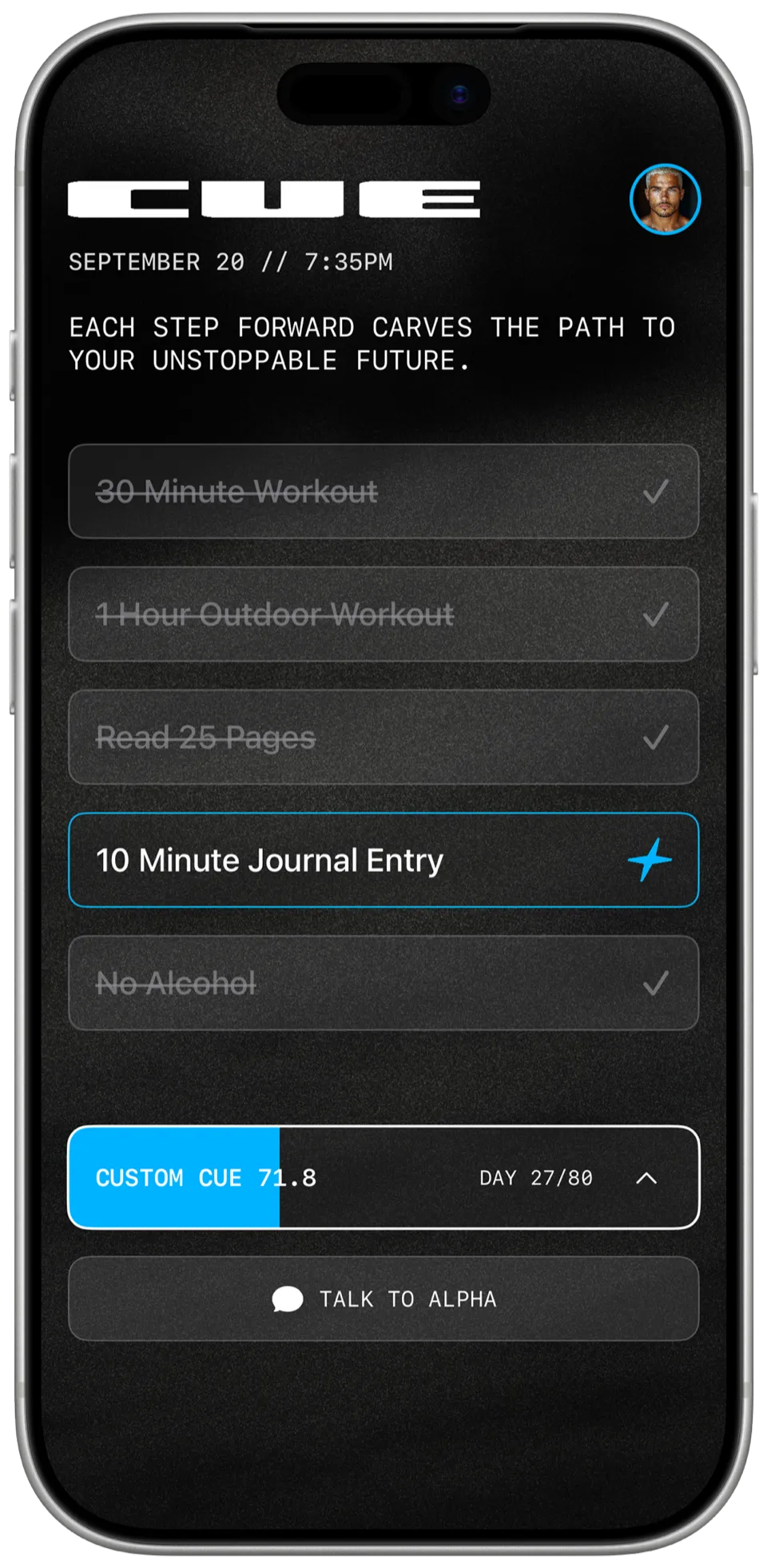
If the rule still feels vague, use the Cue challenge system to make it measurable. If the first action keeps slipping, use the habit-building guide to reduce friction. If you miss, use the restart decision instead of pretending the month is over.
You do not need a new personality by next month. You need one piece of evidence that you finish what you start.