You've tried building habits before. You lasted a week. Maybe two. Then life happened. Motivation faded. The habit died.
Now you're wondering what you did wrong. Here's the truth: you built the habit on motivation instead of structure.
Habits that stick aren't built on feelings. They're built on fixed systems that work when you don't feel like it.
Why Most Habits Fail
Most people approach habits like this: "I'm going to start working out." "I'm going to eat healthier." "I'm going to read more."
No structure. No commitment. No accountability. Just vague intentions powered by temporary motivation.
That's not a habit. That's a wish.
Habits that stick require three things: specificity, commitment, and tracking. Without all three, you're setting yourself up to fail.
Make It Specific
"I want to work out more" is not specific. It's unclear. Your brain doesn't know what to execute.
"50 push-ups every morning before breakfast" is specific. Your brain knows exactly what to do. No interpretation. No negotiation.
Vague habits fail because they leave too much room for flexibility. And flexibility is the enemy of consistency.
Define the exact action. Define the exact time. Define the exact trigger. Remove ambiguity.
Commit to a Fixed Duration
Open-ended commitments don't work. "I'm going to meditate every day" sounds good, but there's no finish line. So when it gets hard, you quit.
Set a fixed challenge: 30 days. 60 days. 90 days. Pick a number and commit.
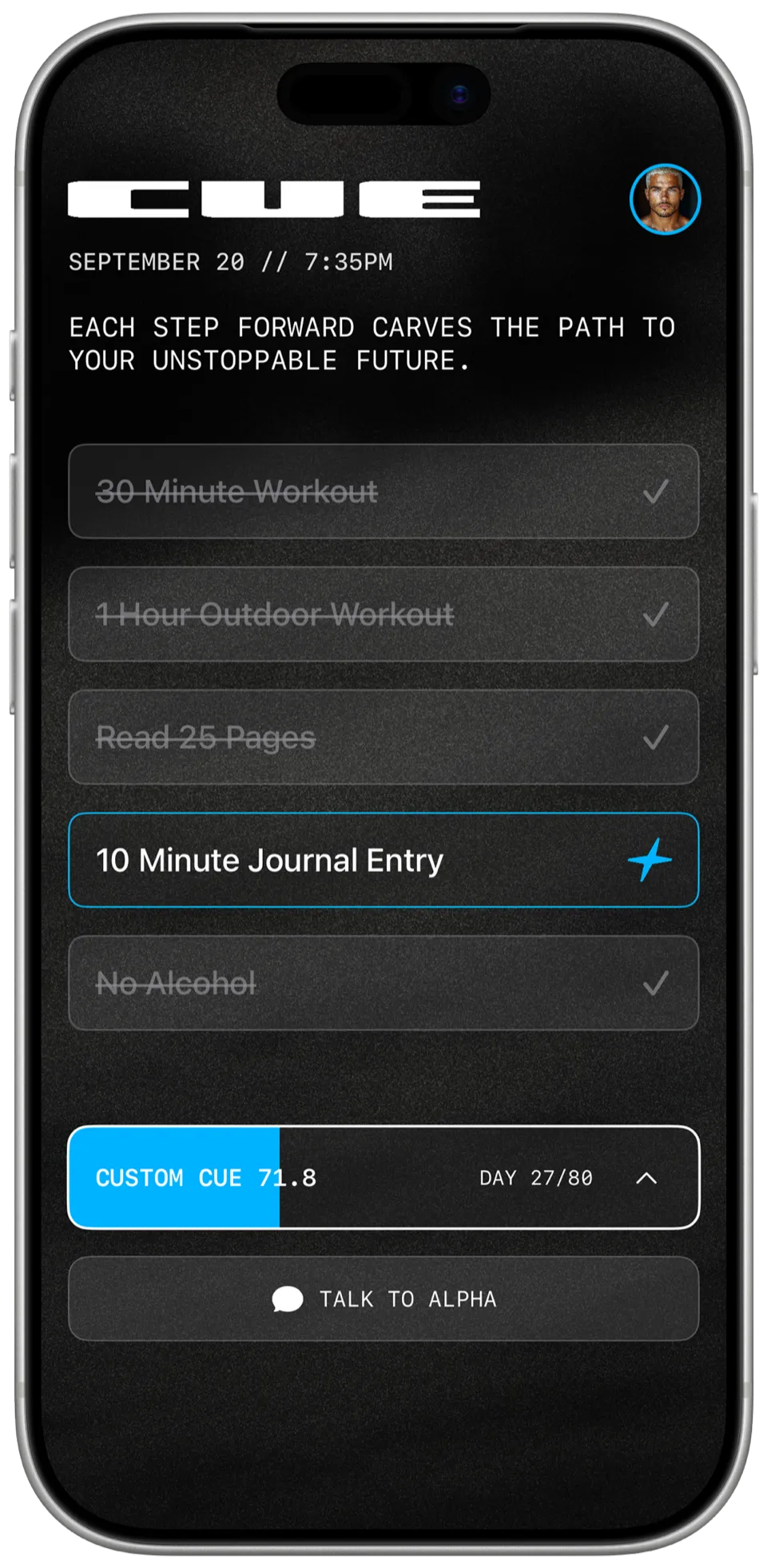
Cue is built around this principle. You don't commit to a habit forever. You commit to a fixed-length challenge. That mental shift makes all the difference.
Knowing there's an endpoint makes the hard days manageable. You're not asking "Can I do this forever?" You're asking "Can I do this for 30 days?" The answer is yes.
Track Every Single Day
If you're not tracking, you're not building a habit. You're hoping.
Tracking creates accountability. It shows you proof of your execution. It turns abstract intentions into concrete data.
Miss a day? You see it. Hit a streak? You see that too. The visibility forces honesty.
Cue tracks every day. Check off each completion. Miss one? Restart the challenge. That's the system. That's how accountability is built.
Start Smaller Than You Think
Most people start too big. They commit to an hour at the gym when they haven't worked out in months. They crash within a week.
Start with something so small it feels almost trivial. One push-up. One page. One minute of meditation.
The goal isn't intensity. It's consistency. You're building the neural pathway. You're proving to yourself that you can execute daily.
Once the habit is automatic, you can scale. But you have to establish it first.
Anchor It to Something Existing
The easiest way to build a new habit is to attach it to something you already do.
"After I pour my coffee, I'll do 10 push-ups."
"After I brush my teeth, I'll meditate for 2 minutes."
"Before I check my phone, I'll write one sentence in my journal."
This is called habit stacking. You're leveraging an existing behavior as a trigger for the new one. It removes the need to remember. The trigger does that for you.
Remove Friction
Every bit of friction makes it easier to skip the habit.
Want to work out in the morning? Sleep in your gym clothes. Put your shoes by the bed. Remove the friction of getting ready.
Want to read before bed? Put the book on your pillow. Don't make yourself search for it.
Want to eat healthier? Prep your meals on Sunday. Don't rely on willpower at 7 PM when you're exhausted.
Make the habit the path of least resistance. Make skipping it the harder option.
Expect Resistance
You will not want to do it. Accept that now.
There will be days when you're tired. Days when you're busy. Days when you just don't feel like it.
That's normal. Habits aren't built on the days you feel motivated. They're built on the days you don't — and you do it anyway.
The resistance is part of the process. It's not a sign you're failing. It's a sign you're building discipline.
The Role of Cue in Habit Building
Cue doesn't let you ease into habits. It doesn't offer flexible goals. It forces commitment.
You set a fixed-length challenge. You execute daily. You track completion. Miss a day? Restart.
That structure removes negotiation. It removes the "I'll make it up tomorrow" excuse. It builds habits through execution, not intention.
Most apps track your streaks and let you continue even after missing days. Cue doesn't. The restart rule forces accountability. It teaches you that missing isn't failure — not restarting is.
What Happens After 30 Days
After 30 days of daily execution, the habit becomes automatic. You stop debating it. You just do it.
That's when you know it's stuck. Not because it's easy. But because it's automatic.
At that point, you can layer another habit. Add another rule. Build another system.
But don't rush. Master one habit before stacking another. Depth over breadth.
Start Today
Pick one habit. Make it specific. Commit to 30 days. Track every day.
Don't wait for motivation. Don't wait for the perfect moment. Start now. Execute today. Then do it again tomorrow.
That's how habits that stick are built.