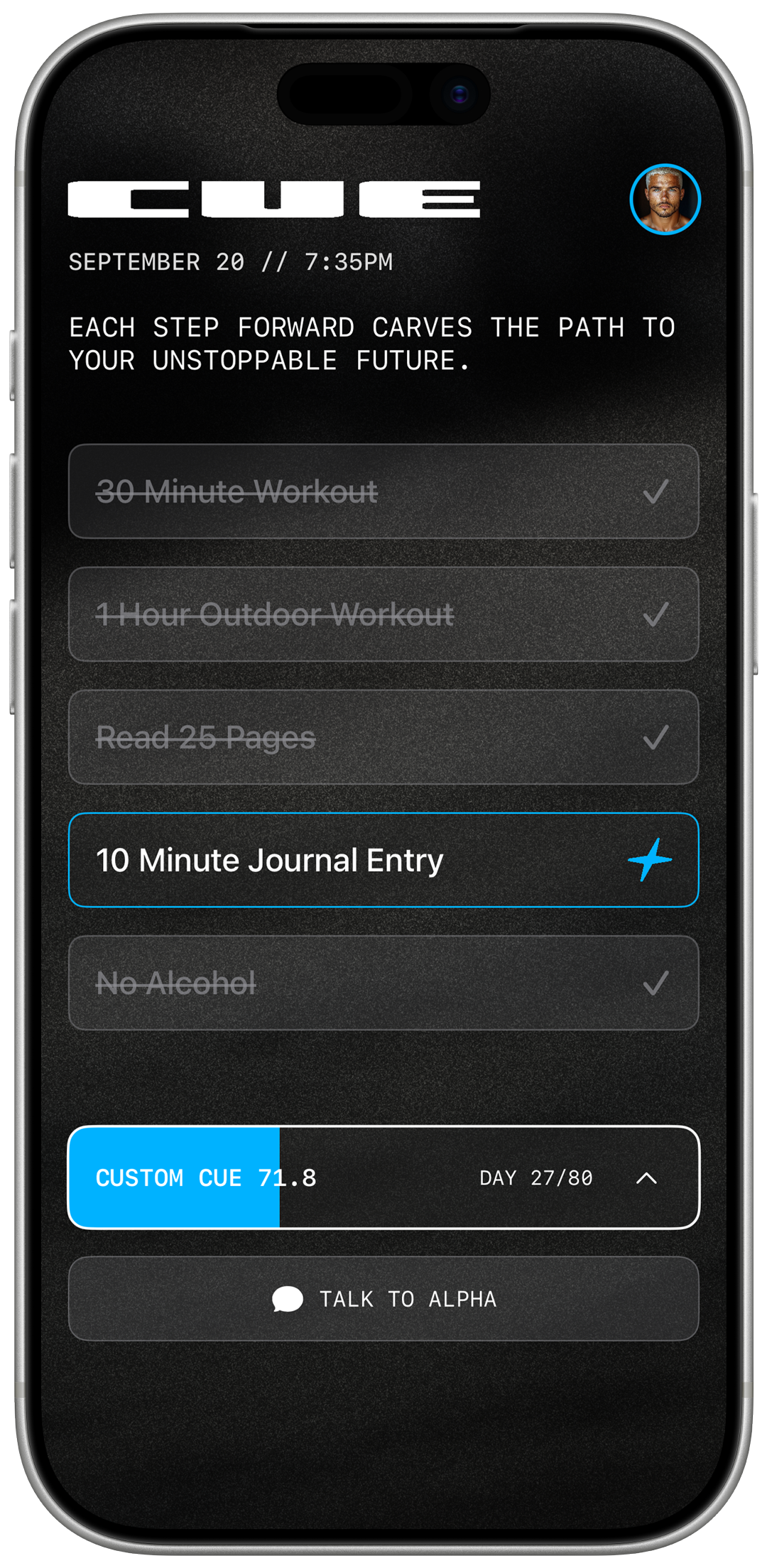

You were on day 27. One more push and you'd hit 30. Then you missed. The streak is gone. Now you're sitting there feeling defeated.
Here's what most people do: they quit. They tell themselves they failed. They lose momentum. They give up.
Here's what Cue teaches: breaking your streak isn't failure. Not restarting is.
The All-or-Nothing Trap
Most people see streaks as binary. Either you maintain it or you failed. Once it's broken, the whole effort feels wasted. So they quit.
That's the all-or-nothing mindset. And it kills more progress than anything else.
Cue doesn't work that way. You break your streak? You restart the challenge. Not quit. Restart. There's a difference.
Quitting means giving up. Restarting means proving the break didn't defeat you.
Why the Restart Rule Exists
The restart rule isn't punishment. It's recalibration. It forces you to confront the reality: you missed. Not because you're weak. Not because you failed. You just missed.
Now you have a choice. Walk away or restart.
Most people walk away because restarting feels like going backward. But it's not. Every restart builds resilience. Every restart proves you're still committed.
The challenge isn't about never missing. It's about always restarting.
What Actually Happens When You Restart
You restart your 30-day challenge on day 1. Again. You feel frustrated. You feel like you wasted effort. But you didn't.
You already proved you can execute for 27 days. That doesn't disappear. The skill is still there. The discipline is still there. The only thing that reset is the counter.
And here's what changes: this time, you know where you slipped. You know what caused the miss. So you adjust. You tighten the system. You execute smarter.
That's not failure. That's iteration.
The Restart Builds Resilience
Every time you restart, you prove something to yourself: breaking doesn't break you.
You missed day 27? You restart. You miss day 15 again? You restart again. Eventually, you realize the streak isn't the point. The commitment is.
Streaks are motivating. But they're fragile. One bad day and they're gone. Commitment isn't. Commitment survives the miss. It survives the restart. That's what builds discipline.
How to Restart Without Losing Momentum
Step 1: Acknowledge the miss. Don't dwell on it. Don't beat yourself up. Just acknowledge it. "I missed. That's the reality."
Step 2: Identify the cause. Why did you miss? Be honest. No excuses. Just facts. "I didn't plan ahead." "I prioritized something else."
Step 3: Adjust the system. What needs to change so it doesn't happen again? Set a reminder. Adjust the timing. Remove friction.
Step 4: Restart immediately. Don't wait until Monday. Don't wait until next month. Restart today. Right now.
The Difference Between Restart and Quit
Quit: "I missed day 27. I ruined my streak. I'll try again next month when I'm more motivated."
Restart: "I missed day 27. I'm restarting today. Day 1 starts now."
One walks away. The other keeps going. That's the difference.
Why Cue Forces Restart Instead of Continuing
Some apps let you maintain your streak even after missing a day. "Freeze your streak!" "Streak protection!" These features feel nice. But they weaken you.
They teach you that missing is okay if you have insurance. That's not discipline. That's negotiation.
Cue doesn't offer streak protection. You miss? You restart. That's the rule. And that rule builds something stronger than a streak. It builds commitment.
Because when you restart three times and still keep going, you prove the challenge doesn't control you. You control the challenge.
What If You Keep Restarting?
You restart on day 5. Then day 12. Then day 8. You're frustrated. It feels like you're not making progress.
But you are. Every restart is data. Every restart shows you what's working and what's not.
Maybe the challenge is too aggressive. Adjust it. Maybe your trigger isn't clear. Fix it. Maybe you're not prioritizing it. Own that.
The restart isn't the problem. The restart is the feedback. Listen to it.
The Mental Shift
Most people see the restart as going backward. "I was on day 27. Now I'm back to day 1. I lost all that progress."
Wrong. You didn't lose 27 days of execution. Those days still happened. You still built the skill. The only thing you lost was the counter.
Shift your perspective. The restart isn't a setback. It's a test. Can you commit even after breaking? That's the real challenge.
How to Use Restart as Motivation
After you restart once, something changes. You don't want to restart again. So you protect the streak harder. You plan better. You execute tighter.
That's the power of the restart. It makes the streak feel earned. Not easy. Earned.
When you finally hit 30 days after restarting twice, that streak means more than if you cruised through without missing. Because you proved you can restart and still finish.
The Long Game
One year from now, you won't remember how many times you restarted. You'll remember that you kept going.
You broke your streak on day 27? You restarted. You broke it again on day 15? You restarted again. Eventually, you hit 30. Then 60. Then 90.
That's not failure. That's resilience. And resilience beats perfection every time.
Start Again Today
You broke your streak. Now restart. Not next week. Not when you feel motivated. Today.
Open Cue. Restart the challenge. Mark today as day 1. Execute. Then do it again tomorrow.
Breaking your streak doesn't define you. Restarting does.