To motivate yourself to clean, stop waiting to want the whole job. Choose one visible finish line, set a ten-minute timer, and begin with the first object in reach. Your target is not a perfect room. It is ten minutes of completed work with no decision left to make.
The room looks like one problem. It is actually fifty small decisions piled on top of each other: where to start, what belongs where, how clean is clean enough, and whether you have time to finish. You stand there trying to solve all fifty. Nothing moves.
Make the job smaller than the resistance. One timer. One zone. One finish line.
The 60-second start: Put a trash bag and an empty basket in the room. Set a timer for ten minutes. Pick the smallest visible zone: one counter, one chair, one corner of the floor. Start the timer before you decide what comes next.
Do Not Clean the House
"Clean the house" is not an action. It has no edge. You cannot tell when you have started, and you cannot tell when you are done. That makes it easy to postpone.
A useful cleaning rule can be scored without an argument:
- Clear the kitchen counter before the timer ends.
- Put every piece of clothing into the closet, hamper, or donation bag.
- Remove trash and dishes from the bedroom.
- Reset the bathroom sink and mirror.
Each rule creates a visible before and after. That matters. When the finish line is clear, you do not need to feel inspired. You need to run the rule.
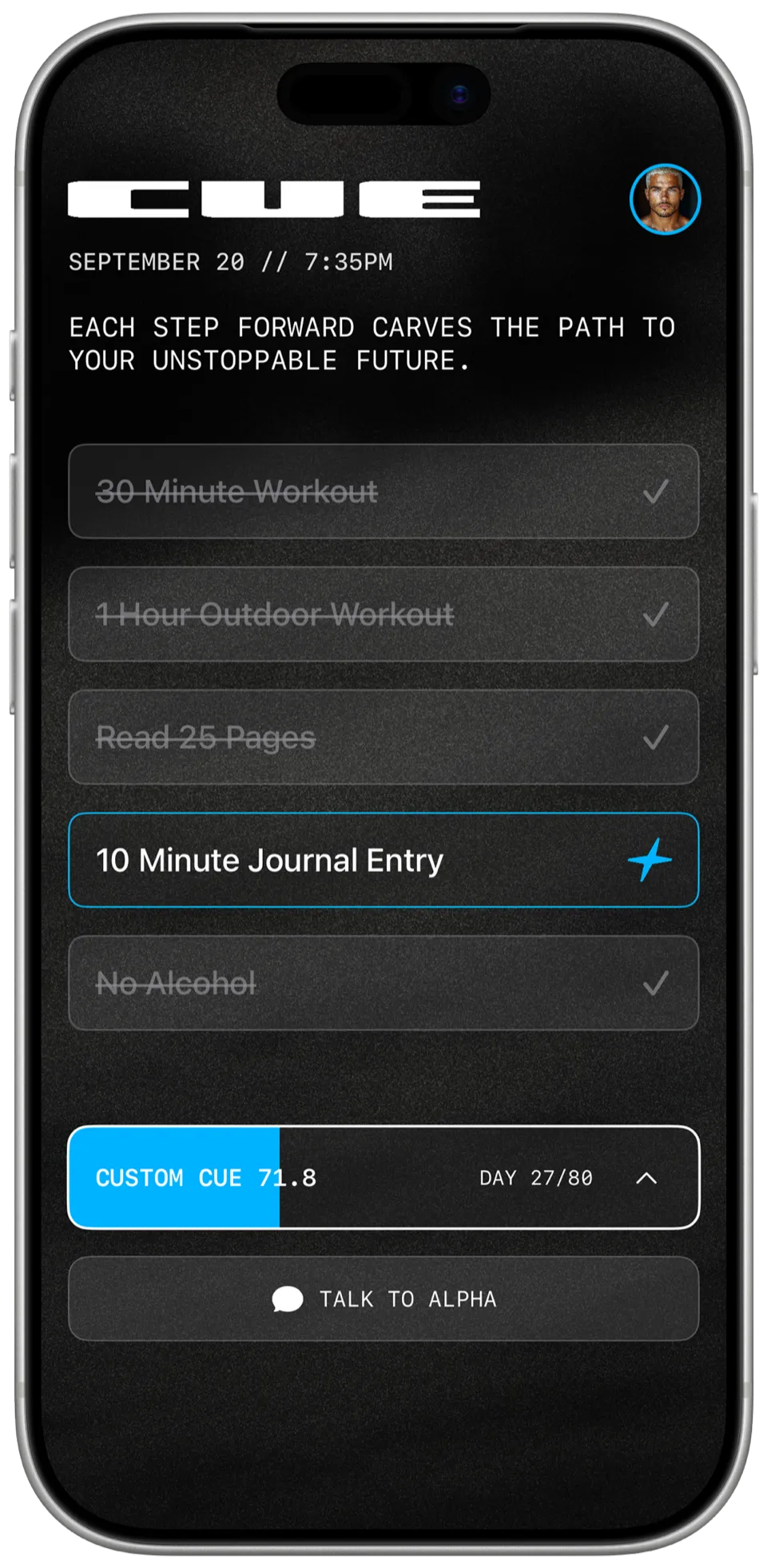
This is the same principle behind a strong challenge system: define the action before the hard moment, make completion binary, and stop moving the line after you begin.
The Ten-Minute Clean
Ten minutes is short enough to start and long enough to change what you see. Use the same sequence every time so you do not spend the timer reorganizing the problem.
- Trash first: two minutes. Pick up obvious trash. Do not open drawers. Do not sort mail. Remove what is unquestionably leaving.
- Dishes next: ninety seconds. Carry cups, plates, and bottles to the kitchen. Do not stop to wash them unless the kitchen is today's zone.
- Clothes and loose items: three minutes. Clothing goes into the closet, hamper, or donation bag. Everything that belongs in another room goes into the basket.
- Clear one surface: two minutes. Choose the desk, counter, table, or nightstand. Finish that surface before touching another.
- Close the loop: ninety seconds. Take out the trash, deliver the basket, and put the cleaning supplies away. When the timer ends, the round counts.
Stopping after ten minutes is allowed. The contract was ten minutes, not an ambush where a small start quietly becomes a two-hour project. If you still have energy, run a second round on purpose. Do not make extra work the price of starting.
Choose a Finish Line for the Room You Are In
Different rooms create different kinds of friction. Use a minimum that produces a visible result without pretending the room will be perfect.
| Zone | Ten-minute finish line | What does not count |
|---|---|---|
| Kitchen | Sink empty, counter cleared, trash removed. | Moving dirty dishes from the sink to the counter. |
| Bedroom | Bed clear, clothes contained, floor path open. | Hiding everything under the bed or in one pile. |
| Bathroom | Sink and mirror wiped, towels hung, trash removed. | Buying organizers before clearing the surface. |
| Living room | Seating clear, dishes removed, loose items contained. | Rearranging decor while clutter stays put. |
| Desk | One working surface, current project ready, everything else filed or contained. | Sorting old files before creating room to work. |
When Ten Minutes Still Feels Too Big
Cut the rule again. Fill one trash bag. Clear one chair. Wash five dishes. Put away ten objects.
The minimum should be small, but it must be real. "Think about cleaning" does not count. "Put every cup in the kitchen" does. The purpose of a minimum is to create movement, not to create a technicality.
Remove setup friction before the next round. Keep trash bags where clutter collects. Put a hamper where clothes land, not where you wish they landed. Store the spray and cloth near the surface you use them on. A good environment makes the correct action shorter.
If cleaning is difficult because of depression, ADHD, chronic illness, disability, grief, or an unsafe living situation, a timer is not treatment and this is not a character test. Use the smallest safe version that fits today, ask for practical help when you need it, and leave hazardous cleanup to qualified professionals.
Stop Reorganizing the Mess
Cleaning stalls when every object becomes a new project. You pick up a cable, decide the whole drawer needs a better system, start comparing organizers, and lose the ten minutes without clearing anything.
Use three destinations during the round:
- Out: trash, recycling, dishes, and donations leave the zone.
- Home: objects with a known home go there now.
- Decide later: objects without a home go into one basket. The basket is contained work, not a permanent hiding place.
Do not buy storage for objects you may not keep. Do not empty a full drawer to solve one loose item. Finish the visible reset first. Schedule sorting as its own challenge if the basket keeps filling.
If you share the space, set a boundary around what you control. Clear your desk, your clothes, or your side of the room. Do not throw away another person's belongings to manufacture a clean finish. Put disputed items in a named shared container and agree on a separate decision time.
A clean round should leave less unfinished work in view than it found. If the room looks worse when the timer ends, the task was probably too broad. Close the open drawer, contain the category, and choose a tighter zone tomorrow.
Run a Seven-Day One-Zone Challenge
One heroic cleaning day often creates one exhausted person and six days of drift. A better test is seven short rounds with the decision made in advance.
| Day | Zone | Completion rule |
|---|---|---|
| 1 | Kitchen | Complete the ten-minute sequence. |
| 2 | Bedroom | Clear the bed, clothes, and floor path. |
| 3 | Bathroom | Reset the sink, mirror, towels, and trash. |
| 4 | Living room | Clear seating and contain loose objects. |
| 5 | Desk or drop zone | Create one usable surface. |
| 6 | The avoided spot | Run one ten-minute round. No expansion required. |
| 7 | Whole-home reset | Return one item to each completed zone and remove the final trash. |
Write the seven zones down before Day 1. If a day gets crowded, the ten-minute rule stays ten minutes. You are practicing follow-through, not negotiating the challenge into a different shape every evening.
If you miss a day, record the miss honestly. Then choose deliberately: restart the seven-day run, or revise the next challenge before it begins. Do not quietly rewrite yesterday. The restart is a decision, not a shame cycle.
What to Do Right Now
Look at the room you are in. Name one visible finish line. Put a bag and a basket beside you. Start ten minutes.
You do not need the perfect playlist, a free afternoon, or a sudden desire to clean. You need one completed round. Make the room prove that you started.
If this pattern keeps showing up in other parts of your life, read why motivation is an unreliable starting signal. The useful replacement is not more pressure. It is a rule clear enough to execute.