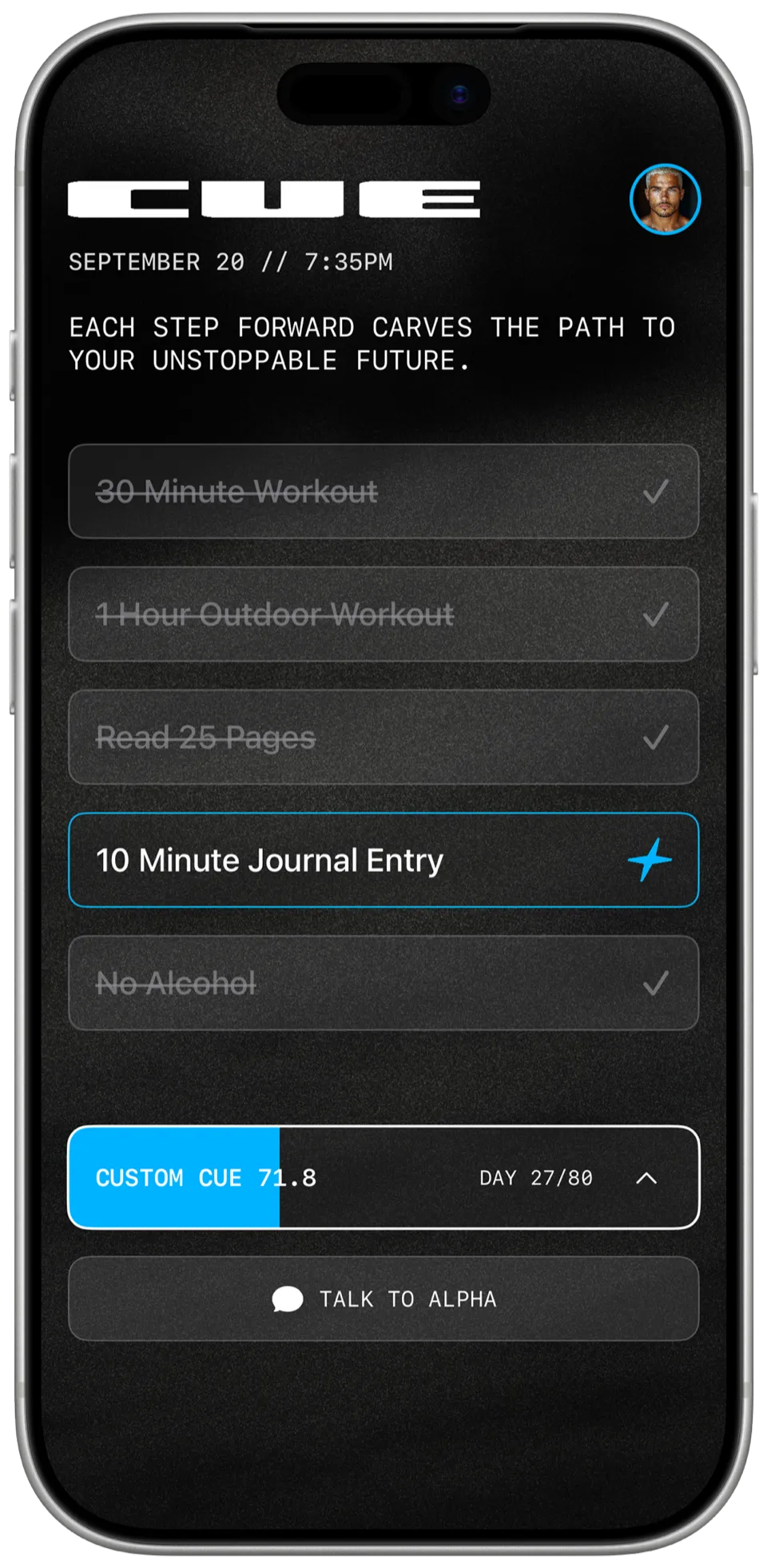
Somebody you follow disappeared for three months. No posts, no parties, no explanation. Then they came back leaner, sharper, with something finished. When someone asked what happened, they said two words: monk mode.
This page covers what monk mode actually is, the rules people run, how long it should last, why most attempts collapse inside two weeks, and how to finish one.
What Monk Mode Means
Monk mode is a fixed period — usually 30 to 90 days — where you strip your life down to a small set of priorities and cut everything that doesn't serve them.
The name is the whole idea. A monk doesn't have a more disciplined personality than you. He has a more disciplined environment. Fewer inputs. Fewer choices. Nothing to negotiate with. Monk mode borrows that structure for a season without joining a monastery.
It is not a personality change, a vow of silence, or a permanent lifestyle. It's a training window: you go quiet, you do the work, you come back different.
The Standard Rules
Like most internet challenges, there's no official rulebook — every version is someone's personal protocol. But nearly all of them are built from three layers:
1. Elimination — what goes
- Social media and short video. Deleted or locked for the entire window. This is the non-negotiable core of every serious version.
- Alcohol and weed. Zero, for the duration.
- Junk entertainment. Aimless streaming, gaming binges, group-chat marathons.
- Low-value socializing. The default nights out you attend out of inertia — not your friendships themselves.
2. Execution — what fills the space
- One primary goal. The reason for the whole thing: a body, a business, a skill, an exam. Monk mode without a target is just hiding.
- Daily deep work. A fixed block — usually 2 to 4 hours — aimed at that goal.
- Daily training. The physical anchor. Gym, run, or a hard session at home.
3. Maintenance — what keeps you running
- Fixed sleep schedule. Same wake time every day.
- Reading. Ten pages a day is the common floor.
That's it. Five or six daily rules, all binary. If your monk mode has fifteen rules, you've designed a fantasy, not a protocol.
How Long Should It Last?
The standard windows are 30, 60, or 90 days. First time? Run 30. It's long enough to break the scroll reflex and finish something real, and short enough that the end date stays visible when the novelty wears off.
What you don't do is start an open-ended monk mode. "From now on" is not a commitment — it's a mood, and moods end. A hard end date is what makes the hard days survivable: you're not giving this up forever, you're giving it up until March 1.
Why Most Monk Modes Collapse
The rules were never written down. "Less phone, more focus" is a vibe. On Day 9, when a vibe meets an invitation, the invitation wins.
Willpower guards the phone. You kept the apps installed and trusted yourself not to open them. Every study on self-control — and every previous attempt you've made — says how that ends.
It went too extreme, too fast. Cutting eight things at once feels heroic on Day 1 and unbearable on Day 6. The crash isn't weakness; it's bad design.
Quitting was free. Nobody knew you started. Nothing happens when you stop. Your brain runs that math from the very first day — and negotiates accordingly.
Same pattern as every failed winter arc: not an effort problem, a structure problem. The people who finish aren't more motivated. They just made the exit more expensive than the work.
How to Run One That Sticks
1. Pick the goal first
One sentence: what exists on the last day that doesn't exist now? Every rule either serves that sentence or gets cut.
2. Write five binary rules
Each one checkable by a stranger. "Deep work 7–9 AM" is a rule. "Be more focused" is not.
3. Set the dates and the failure condition
Fixed start. Fixed end. Miss a day, restart from Day 1 — decided now, not renegotiated on Day 19.
4. Remove the negotiation
Delete or lock the apps. Tell one person who'll ask how it's going. If you've failed this kind of thing before, put something real on the line. The version of you on Day 19 shouldn't get a vote — the version starting today makes the decision and locks the door.
New to this level of structure? Start with the beginner's guide to monk mode — it walks the first 30 days step by step.
Running Monk Mode in Cue
Everything above works on paper — for the small class of people who were never going to need it anyway. For everyone else, the gap between the plan and the follow-through is exactly where monk mode dies. That gap is what Cue closes:
- Your rules become a challenge. Fixed length, your five daily tasks, all binary. Every day is complete or it isn't.
- The distraction lock does the eliminating. The apps you're quitting get locked for the window — the fight with the feed stops being a daily rematch you have to win.
- You sign a contract. Social accountability or real financial stakes. Quitting stops being free, which was the design flaw in every previous attempt.
- Miss a day, Day 1. The app enforces the restart rule so you don't have to trust your own scorekeeping.
Ninety days from now, you're coming back different either way. The only question is whether the work got done.
FAQ
How long should monk mode last?
30, 60, or 90 days. First time: 30. Long enough to change how you work, short enough that the end date feels real. Open-ended monk mode isn't a challenge — it's a claim you'll quietly abandon.
Do I have to cut off my friends?
No. Monk mode cuts low-value socializing — the default nights out, the group-chat marathons — not human contact. Keep training partners, family, and anyone tied to the goal. You're removing noise, not people.
Can I still use my phone?
As a tool, yes — calls, maps, work. What goes is the feed. Most people delete the apps or lock them for the window, because willpower alone loses that fight by week two.
Is monk mode healthy?
With fixed dates, clear rules, and a goal on the other side, it's a focus protocol. It turns unhealthy when it has no end date and becomes a way to avoid life instead of building one.
What if I break it for a day?
Decide before you start. The strictest standard: the run restarts from Day 1. What you don't do is "pick it back up tomorrow" with no consequence — that turns the protocol back into a mood.