You checked your phone eleven minutes into a movie you chose. You scroll while eating, while walking, while watching something else. Nothing feels interesting unless it's coming through a screen at full volume.
That's the problem the dopamine detox went viral promising to fix. Here's what it actually is, what the science really says, the rules people run, and how to do one that changes something instead of ruining a weekend for nothing.
What a Dopamine Detox Means
A dopamine detox is a fixed period where you cut the cheapest, most engineered stimulation out of your life — short video, feeds, games, porn, sometimes junk food — so that ordinary life starts registering as rewarding again.
Let's be straight about the name, because half the internet won't be: you cannot detox dopamine. It's a neurotransmitter you need to move, eat, and stay alive. Nothing about abstaining "flushes" it. If a page tells you otherwise, it's selling something.
But here's the part the debunkers miss: the protocol works anyway. The real mechanism isn't chemistry — it's contrast. When every idle moment gets filled by an app engineered by a thousand people to be more stimulating than your actual life, your actual life loses. Remove the engineered inputs for long enough, and the baseline resets. Books hold your attention again. Work feels less like withdrawal. Boredom becomes fuel instead of an emergency.
Bad name. Real effect.
The Standard Rules
There's no official ruleset — only tiers. Pick one deliberately:
Tier 1 — The 24-hour hard reset
- No phone, no screens, no music, no reading for pleasure — nothing but food, water, walking, journaling, and your own head.
- One day. It won't rewire anything permanent, but it's a diagnostic: how loud does the craving get, and how fast?
Tier 2 — The weekend version
- 48 hours. No social media, short video, games, or porn.
- Music, books, exercise, and real conversation stay in.
- The most popular format — long enough to feel the reset, short enough to actually attempt.
Tier 3 — The 30-day protocol
- Pick your two or three biggest inputs — for most people that's short video, one feed app, and games — and cut them completely for 30 days.
- Everything else stays normal. You're not living in a cave; you're removing the specific hooks.
- This is the version that changes the habit instead of just interrupting it.
Whichever tier you pick, the rules must be binary. "Less scrolling" is not a rule. "Zero TikTok for 30 days" is.
Why Most Detoxes Fail by Day Three
The apps stayed on the phone. You kept the icons one tap away and bet on willpower. That bet has a track record, and you know what it is.
Nothing replaced the input. You deleted four hours of daily stimulation and put nothing in the hole. By Day 2 the boredom feels like a crisis, and the crisis has one obvious exit.
No end date. "I'm quitting short video" is open-ended, and open-ended commitments die quietly. "Zero short video until August 8" is a challenge with a finish line.
Relapse cost nothing. You scrolled for an hour on Day 4, felt bad, and kept "detoxing" as if nothing happened. Once an exception is free, the whole structure is decorative.
The Protocol That Holds
1. Pick your tier and your dates
First time: run the weekend version once, then go straight into the 30-day protocol. The weekend shows you the problem; the 30 days fix it.
2. Name the targets
Two or three specific inputs, cut to zero. Not "less phone" — these apps, gone.
3. Fill the space before it opens
Decide on Day 0 what happens when the urge hits: read, train, walk, cook, work the project. Boredom with a plan is the reset working. Boredom without one is a countdown to relapse.
4. Set the failure condition
A relapse day doesn't count — the run restarts from Day 1. Decided before you start, not during the craving.
5. Lock the door
Delete the apps or lock them for the window. The entire point of a detox is to stop having the argument with yourself thirty times a day. Every hour the apps stay reachable, the argument continues.
Want the deeper walkthrough — including what the first week feels like? Read the dopamine detox guide on Learn.
Running It in Cue
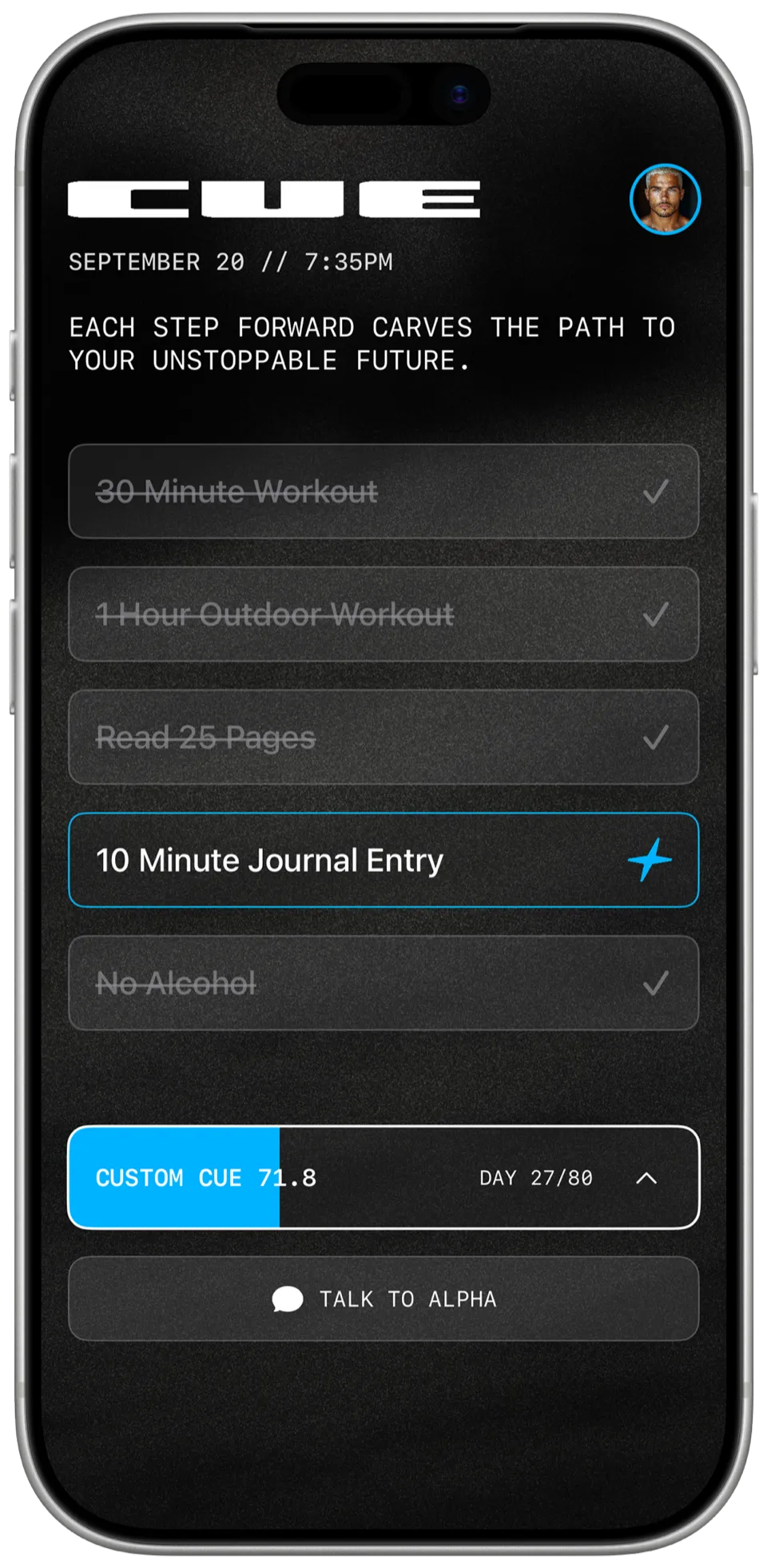
A dopamine detox is the purest commitment-device challenge there is, because the enemy is an app on your phone and the battlefield is every idle moment. Structure beats intention here or nothing does:
- The distraction lock removes the fight. Your targeted apps get locked for the full window. The urge can show up all it wants; the door is closed.
- Your tier becomes a challenge. 2, 7, or 30 days — binary daily tasks, tracked. Either today counted or it didn't.
- Relapse has a price. The restart rule is enforced, and if you want more skin in the game, add social accountability or financial stakes when you commit.
Thirty days from now the feed will still be there, exactly where you left it. The difference is you'll be able to take it or leave it — and you'll have proof of which one you choose.
FAQ
Does a dopamine detox actually work?
Yes — but not how the name suggests. You can't detox a neurotransmitter. What happens is contrast: remove the engineered stimulation and ordinary activities start feeling rewarding again. Bad name, real effect.
How long should it last?
24 hours as a diagnostic, a weekend as the entry version, 30 days to actually change the habit. Pick the tier before you start.
Can I listen to music?
In the 24-hour hard reset, most versions cut it. In the 30-day protocol, music stays — the targets are the compulsive inputs: short video, feeds, games, porn. Decide before Day 1 and write it down.
What do I do when I'm bored?
Boredom is the mechanism working. But plan replacements in advance — reading, training, walking, a real project. An empty detox collapses; a redirected one holds.
What if I relapse and scroll?
Decide the consequence before you start. The strict standard: that day doesn't count and the run restarts from Day 1. One honest restart teaches more than ten quiet exceptions.