You sit down to work. Five minutes later, you're checking your phone. Ten minutes after that, you're watching YouTube. An hour passes. You've done nothing.
The problem isn't your willpower. It's your workspace. Your environment controls your behavior. If your workspace invites distraction, you'll be distracted.
A distraction-free workspace doesn't require willpower. It removes the option to get distracted. Here's how to build one.
Remove Your Phone
Your phone is the biggest distraction in your workspace. Every notification. Every buzz. Every urge to check it. It destroys focus.
The fix: Put your phone in another room. Not face-down on your desk. Not in your pocket. In a different room.
If you need it for calls, enable Do Not Disturb. Allow only specific contacts. Everything else gets silenced.
No phone in your workspace. Non-negotiable.
Single-Purpose Space
Your workspace should have one purpose: work. Not work and gaming. Not work and entertainment. Just work.
If you work from your bed, your brain associates your bed with work. Now you can't sleep. If you game at your desk, your brain associates your desk with gaming. Now you can't focus.
The fix: Dedicate your workspace to deep work only. No streaming. No browsing. No gaming. When you sit at your desk, you work. That's the rule.
Your brain will adapt. The desk becomes a trigger for focus. Sit down, and focus mode activates automatically.
Remove Visual Distractions
Every object in your line of sight competes for attention. Books. Gadgets. Clutter. Your brain processes all of it. That drains cognitive energy.
The fix: Clear your desk. One monitor. One keyboard. One notebook. Nothing else.
Move everything else out of sight. Drawers. Shelves. Another room. If it's not essential for the task, it doesn't belong on your desk.
Close Unnecessary Tabs
You have 20 browser tabs open. Email. Twitter. Reddit. YouTube. Every tab is a potential distraction.
The fix: One tab. One task. Close everything else.
Need to research something? Open the tab. Get the information. Close it. Don't leave it open "just in case."
The fewer tabs open, the fewer options to get distracted.
Block Distracting Websites
You tell yourself you'll just check Twitter for 2 minutes. Thirty minutes later, you're still scrolling.
The fix: Use a website blocker. Block social media. Block news sites. Block anything that pulls you away from work.
Set it during work hours. No overrides. No "just this once." Blocked means blocked.
If you need those sites for work, schedule specific times to check them. Not whenever you feel like it.
Turn Off Notifications
Every notification breaks your focus. Email. Slack. Messages. Each one pulls your attention away from the task.
The fix: Turn off all notifications during deep work. Email can wait. Messages can wait. Nothing is urgent enough to interrupt focus.
Check email twice a day. Morning and afternoon. Not every 10 minutes. Batch your responses. Then get back to work.
Optimize Your Chair and Desk
If your chair is uncomfortable, you'll fidget. If your desk is too low, your posture suffers. Physical discomfort creates mental distraction.
The fix: Invest in a good chair. Your desk height should allow your arms to rest at 90 degrees. Your monitor should be at eye level.
Comfort doesn't mean soft. It means ergonomic. You should be able to sit for 2 hours without discomfort.
Control the Lighting
Dim lighting makes you tired. Harsh lighting strains your eyes. Both kill focus.
The fix: Natural light is best. Position your desk near a window. If that's not possible, use a desk lamp with adjustable brightness.
Avoid overhead fluorescent lights. They cause eye strain. Use warm, indirect lighting instead.
Noise Control
Background noise destroys focus. Conversations. Traffic. Music with lyrics. All of it competes for attention.
The fix: Noise-canceling headphones. White noise. Instrumental music. Or silence.
If you work in a noisy environment, invest in good headphones. They're not optional. They're essential.
One Task at a Time
You sit down to write. But you also need to edit. And research. And respond to emails. So you switch between all of them. Nothing gets done.
The fix: One task per session. Decide before you sit down. "I'm writing for the next 90 minutes." Not writing and editing. Just writing.
Finish the task. Then move to the next one. No multitasking. No task-switching. Deep work requires singular focus.
Time Blocking
You work whenever you feel like it. Which means you never really work. You dabble. You start and stop. You get distracted.
The fix: Block time for deep work. 9 AM - 11 AM: writing. 2 PM - 4 PM: design work. Lock it in your calendar.
During those blocks, nothing else exists. No meetings. No calls. No distractions. Just the task.
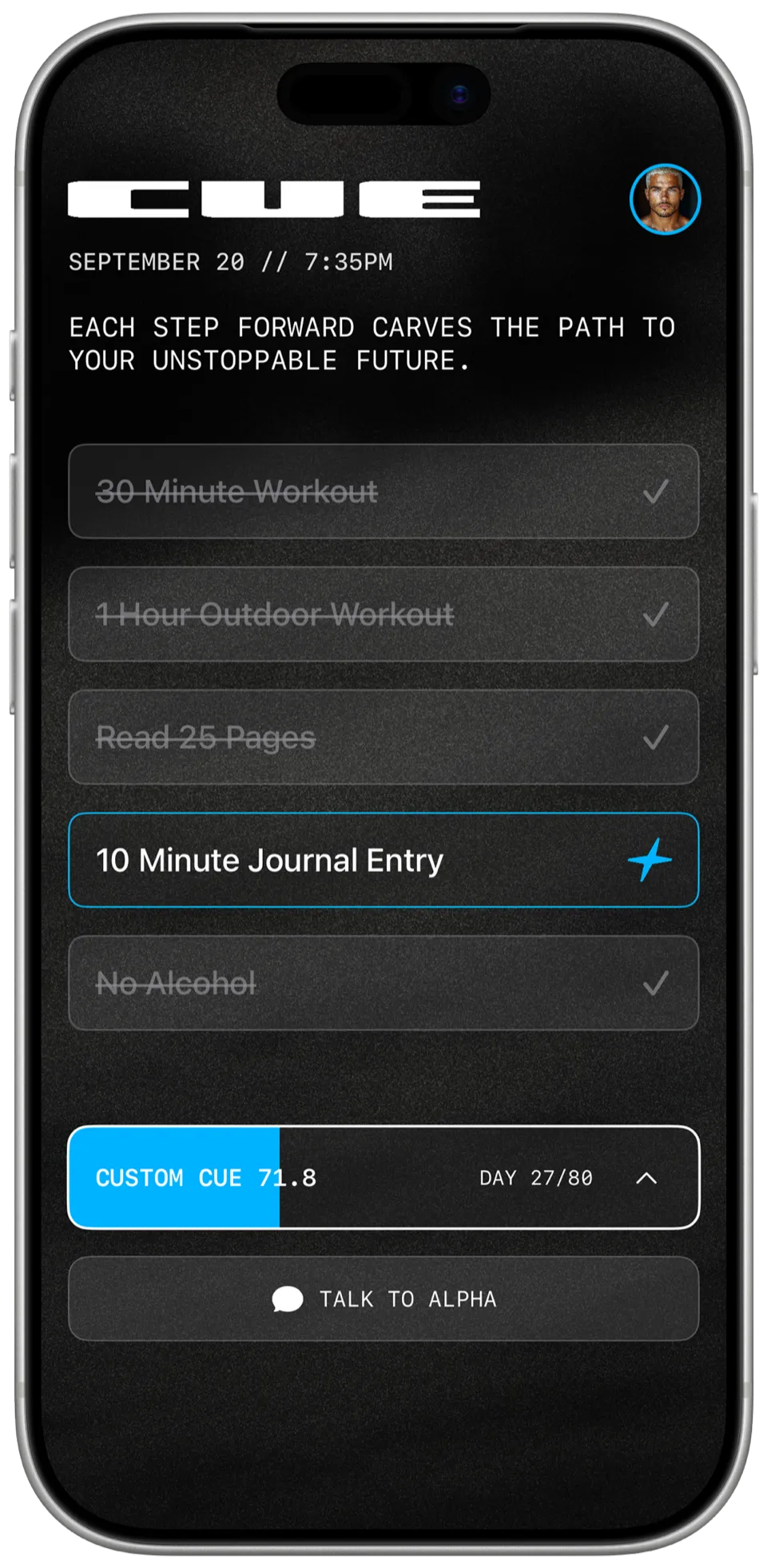
Use Cue to track your deep work sessions. Set a 30-day challenge: 2 hours of distraction-free work daily. Track it. Miss a day? Restart.
The 90-Minute Rule
Your brain can sustain deep focus for about 90 minutes. After that, attention fades. Pushing longer leads to diminishing returns.
The fix: Work in 90-minute blocks. Then take a real break. Not a "scroll your phone" break. A real one. Walk. Stretch. Move.
After the break, start another 90-minute block. Two blocks per day is 3 hours of deep work. That's more than most people do in a week.
Build the Routine
Your workspace is ready. Now you need a routine. A trigger that tells your brain "focus mode starts now."
The fix: Create a pre-work ritual. Make coffee. Close all tabs. Put phone in another room. Open your task list. That sequence becomes the trigger.
Do it every day. Same order. Same actions. Your brain will learn: this ritual = focus.
Track Your Focus Sessions
If you're not tracking, you're not accountable. You'll convince yourself you worked for 3 hours when you really worked for 30 minutes.
The fix: Set a Cue challenge. 2 hours of distraction-free deep work daily for 30 days. Track every session.
Miss a day? Restart. That structure forces honesty. You either did the deep work or you didn't. No excuses.
What Changes
After 30 days of working in a distraction-free environment, something shifts. Focus becomes easier. You stop reaching for your phone. You stop checking tabs.
Deep work stops feeling like a battle. It becomes automatic. Because the environment does the work for you.
Start Today
Pick one change. Remove your phone from your workspace. Block distracting websites. Turn off notifications.
One change this week. Then add another next week. Build the environment slowly. Layer by layer.
30 days from now, your workspace will force focus. And focus is what builds results.
Need a concrete first session? Use the five-minute study start. If the room itself is the distraction, clear one visible zone with the 10-minute cleaning system.